Terry Bonchaka: Remembering the Life and Legacy of a Ghanaian Hiplife Legend
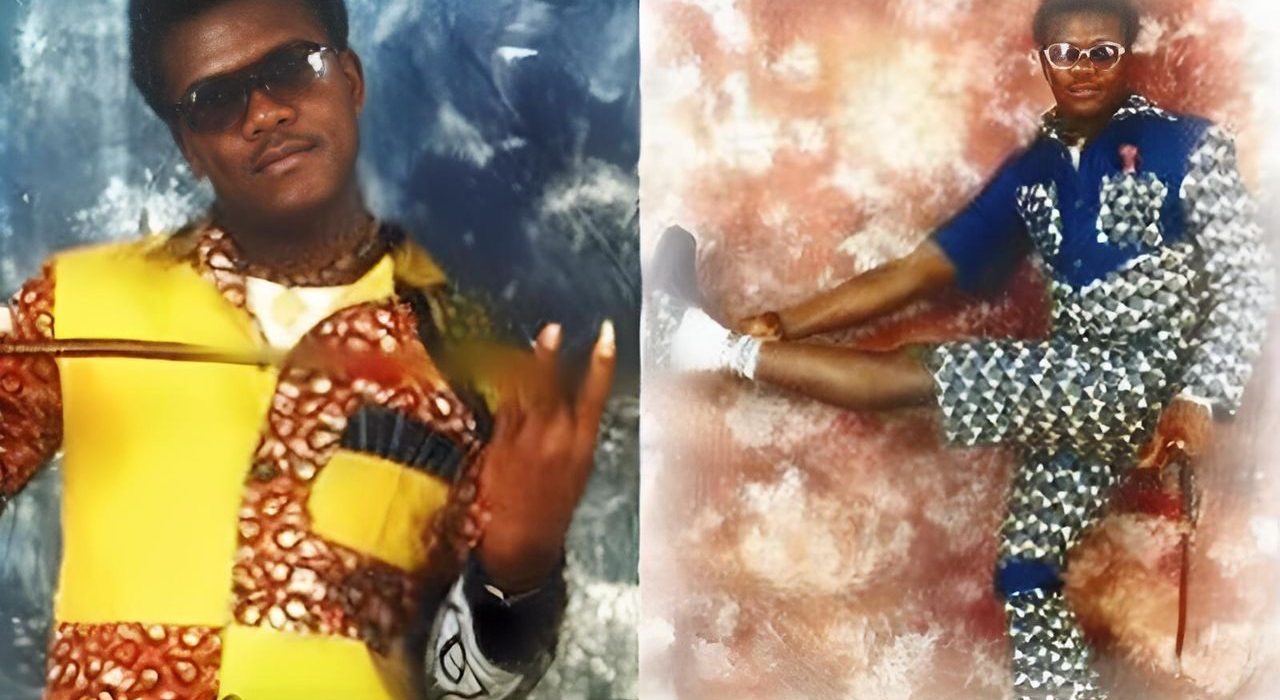
Terry Bonchaka, born Terrence Nii Okai Mensah Adjetey on March 23, 1982, was an extraordinary Ghanaian hiplife artiste. Despite his life being cut short, he left an indelible mark on the music industry. Raised in a family of six, including parents Mr. Robert Adjetey and Mrs. Charlotte Adjetey, and siblings Jerry, Melvin, and Marilyn, Terry went on to become a household name in Ghana and beyond. Notably, he was the grandson of Peter Ala Adjetey, Ghana’s former Speaker of Parliament.

Terry Bonchaka’s independent spirit and passion for music were largely influenced by his mother. However, his talent can be attributed to his entire family, including his father, Mr. Robert Adjetey, and his maternal lineage. Interestingly, his grandfather, Hon. Peter Ala Adjetey, the late Speaker of Parliament of Ghana, had a passion for music as well. As Terry once said, “I was born into a life of entertainment in people.”
Terry’s family significantly influenced his music career. Initially, his parents, Mrs. Charlotte Adjetey and Mr. Robert Adjetey, had reservations due to their Jehovah’s Witnesses background. However, they eventually supported his passion for music, with his mother keeping a close eye on him. According to his mother, Terry would often stay out late attending musical shows or playing football, which worried them about potential problems or bad influences. She encouraged his musical talents, recalling: “He started accompanying me to church, singing, and then began rapping as an alternative to hanging out with the wrong crowd. He can’t go to jail for doing music; he could make a good living out of it.”
Even at that tender age, he was the perfect kind you would refer to as a showboy. Terry wasn’t the timid type; he was bold and extraordinarily talented. As his mum would say, “He had no fear whatsoever of crowds. And if you’re asking about inhibition on camera or stage, try zero. He’d perform or sing in front of many elderly persons, and when you’d ask him to repeat it, he’d do it and do it again without hesitation.”
Terry attended Ewit Greenwich Classical Academy in Accra, about 200 meters from their Dansoman residence, for his basic education, where he excelled in his Basic Education Certificate Examination (BECE) with outstanding grades (9-ones). He later attended Adisadel College in Cape Coast for his secondary education. Although he didn’t get into his first-choice school, St. Augustine’s College, due to an administrative hitch, Terry thrived at Adisadel College (Adisco), which he joined in 1998, balancing his General Arts studies and musical talents.
When Terry Bonchaka’s elder brother Jerry’s colleague from Cape Coast Polytechnic, who happened to be the son of the then headmaster of Adisadel College, invited him to witness the performance of Cape Coast’s hottest talent in 1998, Jerry was shocked to discover at the show that it was his own brother, Terry Bonchaka, on stage. This marked Terry’s first major show, where he shared the stage with notable artists like Obrafour and Tic Tac.
After secondary school, Terry’s mum picked up a University of Ghana entry form for him in 2001. However, that same year, Media Whizz Kids introduced the Hiplife segment to the Miss Ghana competition, and Terry, with his passion for music and Hiplife, jumped at the opportunity.
When his mum found out he was competing in the Central regional contest of the National Hiplife championship, she took time off from work at Accra Brewery Ltd to support him. Arriving just minutes before Terry’s performance, she noticed his outfit – an old school suit and plaited hair – and quickly advised him to change his look. With her help, Terry undid his hair, put on a cap, and went on to win the regional championship.

This experience, among others, led Terry to affectionately refer to his mum as his manager. As time passed and even when Terry and his mum weren’t living together, she would call him at least four times a day to check in, offer advice, and remind him to take life steady amidst his rapidly growing fame.
Fast forward, Terry went on to represent the Central Region in the National Hiplife Competition and emerged victorious, setting him on the path to stardom. The perks that came with the title were substantial: an album deal, a ten-regional performances tour, and more.
This victory catapulted him into the limelight and earned him a spot at Joy FM’s highly acclaimed “Night with the Stars” concert, a platform that significantly boosted his burgeoning career.
As Terry’s big brother, Jerry played a pivotal role, signing business contracts, handling performance negotiations, and ensuring Terry’s well-being. Jerry would often drive him to shows, providing support every step of the way.
Terry’s mum was deeply involved in his life too. How much he earned from shows wasn’t her primary concern. What mattered most to her was that Terry saved enough from his performances to invest in his music career, so they could all enjoy the fruits of his labor later on.
Though Terry’s rise to prominence seemed to happen overnight, he had been performing since age 9. As the entertainment prefect at Ewit School, he had already battled MCs in contests, racking up wins at open mics.
At Adisco, Terry was part of a group called Purple Triangle, which performed frequently both on campus and off. One of their off-campus shows landed most of the group members in trouble, resulting in suspensions – strangely, however, Terry, the leader, wasn’t suspended.
After Terry won the National Hiplife contest, things took a rough turn. The album he was entitled to as part of his prize didn’t materialize months later. Shopping his talent for deals on other labels proved challenging, and when Media Whizz Kids came up, they only offered only cash for studio time.
Everything related to promotion fell on Terry’s shoulders. Hustling became a daily necessity, especially given the difficulties in promoting new artists. Terry couldn’t afford payola (to radio DJs) or other promotional expenses, resulting in limited airplay for his music.
This experience led his former manager, Ambrose Darryl Nmah, a Human Resources and Corporate Affairs Director at Radio Gold, to express frustration with fellow DJs who didn’t support Terry when he needed it most but later showered him with fake sympathy after his passing.
Terry convinced Kaakyire Kwame Appiah of Kaakyire Music Production (KMP) to release his debut album, “Ghana Lady.” However, KMP did little to promote the album. Instead, Terry took matters into his own hands, using stage performances to drive its success. Tracks like the title song “Ghana Lady” and the catchy tune “Puulele” became instant hits.

In the studio, engineers described Terry as confident yet cautious, often seeking feedback from them and his management. Sound engineer Zapp Mallet noted, “My inputs are always accepted with quick and easy-going smiles.”
Terry drew inspiration from Michael Jackson and James Brown’s stage presence, but he was keen to emphasize his originality. He would often say, “Whatever you see me do, either on or off stage, is completely mine. It has nothing to do with Michael Jackson or James Brown.” He would add, “What I’ve learned from them is that a performer can create something distinctively creative without copying others.”
Even in his school days, Terry had a unique style, often shortening one half of his school shirt sleeve and one of his shorts. As he gained popularity, local textiles giant Akosombo Textile Ltd (ATL), a major sponsor of the National Hiplife contest, began sponsoring his outfits.

Initially, they provided fabrics, and Terry would work with his Dansoman-based designer to create his looks. Terry was known for his creative and unpredictable stage entrances. He might roll onto the stage in a medium-sized vehicle tire or be rolled in a wheelbarrow. He would often surprise the audience by jumping from unexpected places, like the first floor of the National Theatre, into the crowd.
Terry never repeated his performance styles, always keeping his shows fresh and exciting. He even performed at the Royal House Chapel Church (Ahenfie) during the Miss Ahenfie in August 2003 event, where he delivered a sermon and performed an unreleased gospel track.
Tragically, Terry Bonchaka’s life was cut short in a car accident on October 29, 2003. At the time, he was returning from a performance at the University of Ghana’s Akuafo Hall Week celebrations. The accident occurred at the Tetteh Quarshie Interchange, where he lost control of his car and collided with a tree. He was pronounced dead at the 37 Military Hospital in Accra. Terry Bonchaka was 21 years old when he passed away.

Terry’s mother recalled her son’s death with immense grief, saying, “When I was aggrieved and started to cry, Terry was always the first among my children to wipe my tears and assure me that everything was going to be alright.” Her voice trailed off, followed by a long pause, as if she couldn’t find the words to continue. Then, large tears began to flow as she whispered, “So who will be around to eat my food whenever I cook it?”
Terry Bonchaka was driving his 1970s American-spec 2-seater MGB convertible, accompanied by his friend Emmanuel Yeboah, aka Rasta, who survived the accident. Other team members, Ziggy, Aaron, and close stage partner Ayisoba, followed in a hired taxi cab.

Eyewitnesses confirmed that Rasta was initially driving, but Terry took over approximately 400 meters from the accident site, reportedly due to concerns about Rasta’s sobriety.
While some reports attributed Terry’s death to careless driving, specifically attempting to overtake two cars in a short distance, his family and friends dispute this account. As a result, various conspiracy theories have emerged. Some speculate that Rasta was indeed intoxicated and Terry took the wheel to minimize risk. Others counter that this decision was riskier, given Terry’s relatively limited driving experience.
The circumstances surrounding his death remain shrouded in mystery. Adding to the controversy, Terry’s mother, Mrs. Charlotte Adjetey, believed her son was murdered, citing an autopsy report suggesting suffocation.

There are other family members and several friends, including musicians, who believe foul play was involved in Terry’s death. Supporting this theory, his elder brother Jerry once said, “I’m not surprised if we later find out that someone in the industry used underhand means to eliminate him, because Terry was rising to stardom and on the verge of signing a major international deal.”
Many others share his sentiment, raising the question: who could have orchestrated such an act? Countering this argument, some point out that it’s unlikely someone would benefit personally from eliminating Terry, as performers often seek spiritual help for protection and success on stage rather than targeting others.
Mr. Edward Addo, then ATL’s Commercial Manager and a close friend of Terry, revealed that they were on the verge of signing a marketing deal with Terry before his untimely death.
It’s no surprise that ATL was a major sponsor of “Terry Bonchaka Night,” a tribute show organized by Radio Gold and hosted at the National Theatre on November 15 to honor Terry’s memory. Furthermore, ATL pledged to release a special clothing line in memory of Terry, which was slated for 2004.
Terry Bonchaka was buried at the La Cemetery in Accra at 3:55 pm on Saturday, November 22, 2003, following a massively attended “wake-keeping ceremony” the previous night at the National Trade Fair site.
His coffin was uniquely designed in the shape of a microphone, paying tribute to his music career, and was placed on an Adisadel College (Adisco) cloth, honoring his connection to the institution.

Terry was known for his initiative and willingness to take risks. He wasn’t selective about his audience; he would gather children around and entertain them. According to his close friends, this helped him learn what made kids happy, and he would often incorporate those elements into his songs. This approach made him particularly popular among children under 10.
Terry led a disciplined life, abstaining from drinking, smoking, and womanizing. He would refuse to let anyone drive him if they would been drinking, even slightly. He also didn’t bring girls home, believing that a showbiz career shouldn’t be mixed with fornication.
Notably, Terry didn’t seem to have any enemies; in fact, many people admired him. According to Jerry, Terry’s nature made it unlikely for him to have enemies. Interestingly, Terry never believed in performers going in for spiritual protections.
Give Terry a beat, and he could write and perform a song in just 15 minutes. After his passing, his family discovered over 120 songs he had written, confirming his ambitious plans to record at least 100 songs before retiring from music.
At the time of his death, he had already recorded 34 new and unreleased songs with four of Ghana’s top engineers: Zapp Mallet (TLC Studios, Kasoa), who produced his debut; Nana King (Willigina Studios, Dansoman); David Kwamena Bolton (D.Kay Bee Studios, Dansoman); and Alberto (PSI, Osu).
Terry Bonchaka had also set plans in motion to transition out of music. He was scheduled to take a course by March 2004, paving the way for his long-held aspiration to pursue a career in law, following in his family’s footsteps. A law school in the UK was being considered, but fate had other plans.
Weeks after Terry Bonchaka’s burial, Jerry, Terry’s elder brother, consulted family members and industry influencers about releasing a posthumous album, though limited information is available on the outcome.
Some of Terry Bonchaka’s notable performances include:
- National Hip-life Championship 2001
- National Hip-life Championship 2002
- Nite with the Stars 2 (November 2002)
- Music Concert in the UK (February-March 2003)
- May Day Concert at KNUST (May 2003)
- Spacefon Legend of the Year in Accra and Kumasi (September 2003)
- West Africa Xplosion for AIDS and Peace with Aki and Pawpaw (October 2003)
- Nite with the Stars 3 (October 2003)
- Akuafo Hall Week Celebrations (October 2003)
Terry’s lyrics often reflected his experiences growing up in Ghana and his observations about life and society. He was known for his storytelling ability and capacity to craft catchy, memorable hooks. His music addressed themes like love, social issues, and personal empowerment.
Terry’s impact on Ghana’s music industry was significant. He helped popularize the hiplife genre and paved the way for other artists. His innovative approach raised the bar for Ghanaian artists and inspired a new generation.
Terry’s family and friends remember him for his kind heart, generosity, and passion for music. His mother recalls his dedication to his craft and ability to connect with people from all walks of life. Terry’s legacy lives on through his music and the memories of those who knew him.

Despite his untimely departure from the world, Terry Bonchaka’s legacy endures. He represented a generation of Ghanaians who saw in him a reflection of their aspirations and dreams. He continues to inspire new generations of musicians and fans alike, with his contributions to Ghanaian music and fashion remaining a topic of celebration. His impact on the hiplife genre, a pivotal part of Ghanaian pop culture, is still vividly remembered and appreciated. Bonchaka’s music not only entertained but also instilled a sense of pride in Ghanaian culture, showcasing the richness and diversity of the country’s artistic heritage.
Click here to check out ASK’s post about Ghanaian Hiplife Legend Terry Bonchaka on 𝕏 (formerly Twitter).